Average Reviews:

(More customer reviews)Are you looking to buy An Introduction to the New Testament: Contexts, Methods & Ministry Formation? Here is the right place to find the great deals. we can offer discounts of up to 90% on An Introduction to the New Testament: Contexts, Methods & Ministry Formation. Check out the link below:
>> Click Here to See Compare Prices and Get the Best Offers
An Introduction to the New Testament: Contexts, Methods & Ministry Formation ReviewDavid A. deSilva has risen among the ranks of modern New Testament scholars as a specialist in socio-rhetorical interpretation. In addition to his position as professor of New Testament and Greek at Ashland Theological Seminary (Ohio), he has authored Honor, Patronage, Kinship and Purity: Unlocking New Testament Culture (the revision of his Ph.D. dissertation from Emory University), Introducing the Apocrypha, the socio-rhetorical commentary on Hebrews titled Perseverance in Gratitude, and several articles and essays. His latest volume, An Introduction to the New Testament: Contexts, Methods & Ministry Formation, is a hefty contribution to the field of New Testament studies.In this introduction, deSilva attempts to merge the critical study of Scriptures with the devotional use for pastors and teachers. He clearly states his objectives in his preface as equipping leaders to "(1) more fully engage the critical and prayerful study of the New Testament, and (2) more reliably discern the direction the Spirit would give through these texts for nurturing disciples and building communities of faith that reflect the heart and character of their Lord" (p. 20). Three presuppositions guide deSilva's approach which include being text-centered rather than phenomenon-centered, special attention to the full range of interpretative strategies, and focusing on each text with its direct application for ministry formation. These concerns are reflected in his treatment of each respective book of the New Testament. Along with the typical introductory issues of authorship, date, audience, and purpose he includes a brief commentary of the contents, excurses focusing on specific interpretative approaches (e.g., rhetorical, sociological, feminist, textual criticisms), and he includes application for ministry settings.
The paradigm he employs is the model of "socio-rhetorical interpretation" developed by Vernon K. Robbins (p. 23). He clarifies that socio-rhetorical interpretation is not a new method, but rather it serves as a model for analysis that encourages interpreters to view the text through the full spectrum of exegetical tools. The text of Scripture is like a tapestry of many interwoven textures, and therefore one must explore the various textures of the text. First, he describes the "inner texture," which involves the use of textual criticism, lexical and grammatical analysis, literary analysis, rhetorical criticism, and narrative criticism (p. 24). The second textual level, called "intertexture," attempts to explore how the author utilizes other texts like the Old Testament, Jewish writings, and Greco-Roman writings. The third area of textual investigation relates to the "social and cultural texture" that seeks to locate the historical influences and conditions relating to how the audience would have received the text. Finally, the aims, intentions, and agendas of the biblical writers are examined against the social political climate that gave rise to the texts with an investigation of the "ideological texture" (p. 25). Socio-rhetorical interpretation helpfully integrates a number of exegetical strategies and constitutes a solid interpretative approach. However, some fads that develop in biblical studies are often overly biased, short lived, and exhibit a tendency to marginalize most traditional and conservative interpretations. Just because some exegetical strategies may yield surprisingly new insights, one must continue to compare critically the merits of such interpretations.
Among the throng of New Testament Introductions, deSilva's contribution provides a number of distinctive aspects. His introduction constitutes the first drawn from a thoroughly socio-rhetorical perspective. As such, deSilva consistently offers sociological and cultural insights into the situation behind the text. Consequently, the first 150 pages are devoted to establishing the historical, social, and political environment that produced the New Testament. DeSilva manages to increase the value of his introduction by incorporating sections highlighting various exegetical techniques. Each section focuses on a specific "exegetical skill" (e.g., Historical criticism, Narrative criticism, Rhetorical criticism, Social-Scientific criticism, Intertextuality, Feminist criticism, and Postcolonial criticism) and he demonstrates how that particular skill is used when interpreting a particular passage. DeSilva also succeeds in striking a balance between the academic and practical study of the New Testament. After discussing the technical aspects of authorship, date, genre, structure, he carefully includes a section on the way each book contributes to ministry formation. His work on Hebrews and Revelation were particularly well written.
His work exhibits the marks of critical scholarship evident in both his organization and treatment of the New Testament books. He organizes his chapters in a manner that not only reflects scholarly awareness but also reveals his own position on critical issues. He places Mark prior to Matthew. He groups related works together in successive chapters (i.e., Acts follows Luke, and the Johannine Epistles for John's gospel). He arranges the Pauline epistles according to a chronological rather than an canonical order (Galatians, Thessalonians correspondences, Corinthian correspondences, Romans, Philippians, Philemon, Colossians and Ephesians, the Pastorals). His treatment regarding authorship also reflects his critical affinities. He concludes that Lazarus is a better candidate for the Beloved Disciple and favors the community hypothesis. DeSilva's discussion of Ephesians comes across slightly one sided in the arguments against Pauline authorship. However, he maintains a number of conservative positions concerning a number of Pauline writings. In a way, this Introduction represents the current and often conflicted state of NT scholarship.
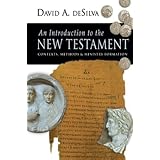
All in all, deSilva has produced a very comprehensive and user friendly New Testament Introduction for seminarians. The book itself has an attractive cover, layout, pictures, sidebars, and provides a useful all-in-one source. Students will benefit from the massive examples of varying exegetical techniques and pastoral sensitivity However, it is not very portable due to its size and weight. The work represents a commitment to evangelical principles, but students may want to compare his conclusions with other Introductions and commentaries. As such, I believe this book makes an excellent companion to the New Testament Introduction by Carson and Moo. For the most part, deSilva has managed to produce a lasting contribution to the field of New Testament studies.
An Introduction to the New Testament: Contexts, Methods & Ministry Formation Overview
Want to learn more information about An Introduction to the New Testament: Contexts, Methods & Ministry Formation?
>> Click Here to See All Customer Reviews & Ratings Now

0 comments:
Post a Comment